How
IoT (Internet of Things) and
Artificial Intelligence (AI) are used in the
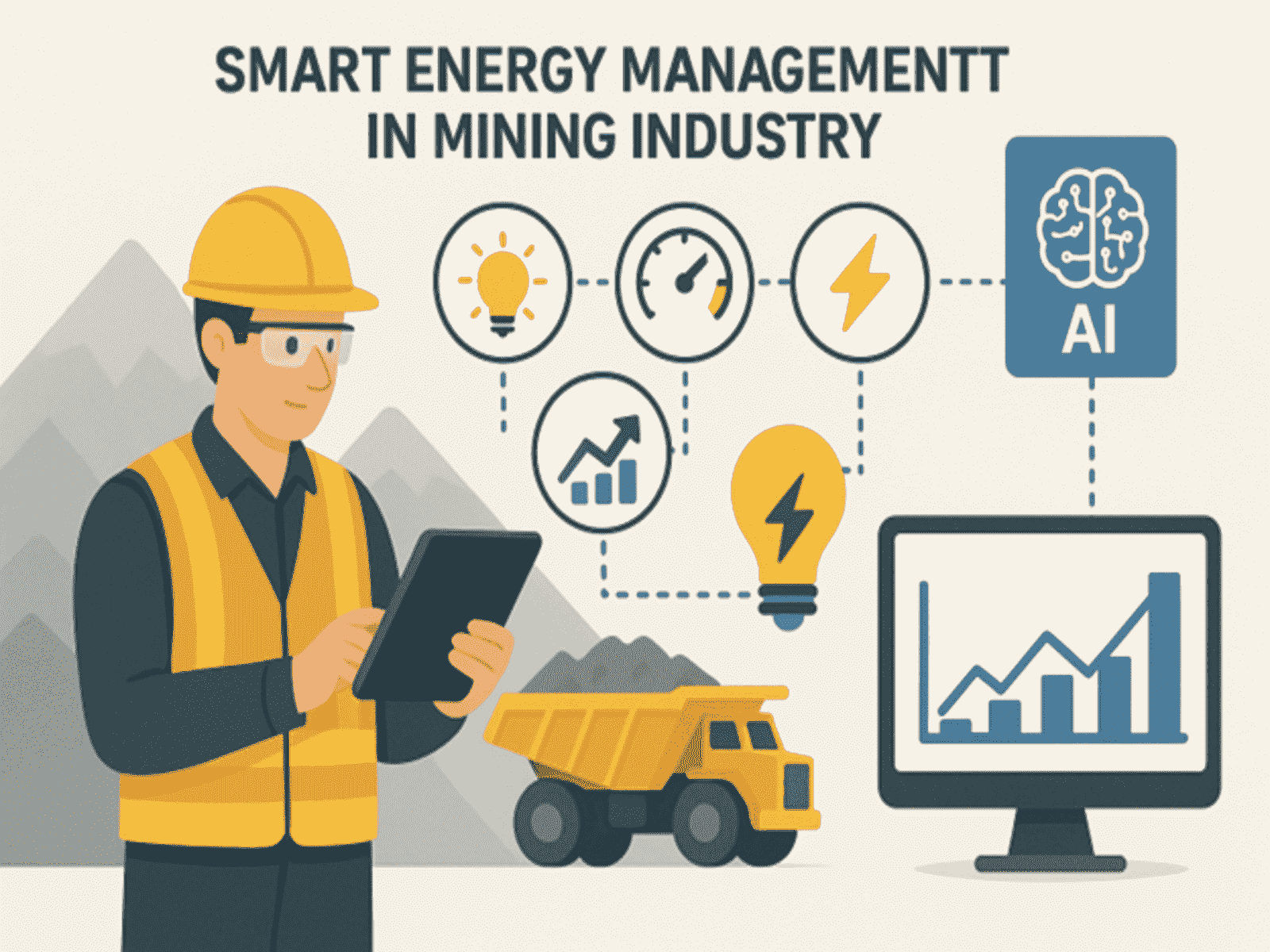
mining industry for smart energy management, with detailed system components, workflows, and benefits
✅ 1. Why Smart Energy Management Matters in Mining
Mining is an energy-intensive industry, with operations consuming energy across:
- Drilling & blasting
- Haulage (diesel-powered and electric fleets)
- Crushing, grinding, and ore beneficiation
- Pumping (dewatering, slurry transport)
- HVAC systems in underground mines
- Lighting, ventilation, compressors, and processing plants
Energy costs can account for
25–40% of operating expenses. Hence, optimizing energy use with
IoT sensors and AI algorithms is critical for reducing costs and carbon footprint while ensuring uninterrupted operations.
🛰️ 2. IoT Applications in Smart Energy Monitoring
A. Smart Energy Metering
- IoT-connected energy meters (electricity, diesel, gas) installed at:
- Substations, MCC panels, gensets, compressors
- Remote mining equipment
- Ore processing plants
- Monitors:
- kWh, kVA, Power Factor
- Voltage and current imbalance
- Load patterns
B. Diesel Fuel Monitoring
- IoT fuel level sensors on:
- Haul trucks, loaders, excavators, and generators
- Monitor:
- Fuel fill, consumption, and refueling cycles
- Leak detection and theft prevention
C. Thermal and Vibration Sensors
- Track energy loss from motors, drives, belts, and heat exchangers
- Installed in crushers, conveyors, mills
D. Environmental Sensors
- Monitor temperature, humidity, pressure to optimize HVAC and ventilation in underground operations
🧠 3. AI Applications for Energy Optimization
A. Predictive Load Management
- AI models forecast peak load times based on:
- Shift schedules
- Equipment operating cycles
- Historical consumption
- Enables load leveling and demand response strategies (e.g., turning off non-critical loads during peak tariffs)
B. Energy Usage Pattern Recognition
- AI clusters and classifies energy profiles for:
- Inefficient vs optimal machine cycles
- Operator behavior affecting energy use
- Abnormal spikes indicating leaks or faults
C. Predictive Maintenance for Energy-Draining Equipment
- Anomaly detection on:
- Overheating motors
- Low-efficiency compressors
- Leaky pumps
- Reduces unplanned energy-intensive breakdowns
D. Smart Scheduling of High-Load Equipment
- AI algorithms optimize operating schedules:
- Crusher, ball mill, ventilation fans
- Charging stations for EV mining trucks
- Based on tariff windows, solar/wind availability, and productivity targets
E. Integration with Renewable Energy Sources
- AI manages microgrids by:
- Balancing diesel gensets with solar PV, wind, and batteries
- Prioritizing clean energy use while maintaining power quality
🏗️ 4. System Architecture for Smart Energy Management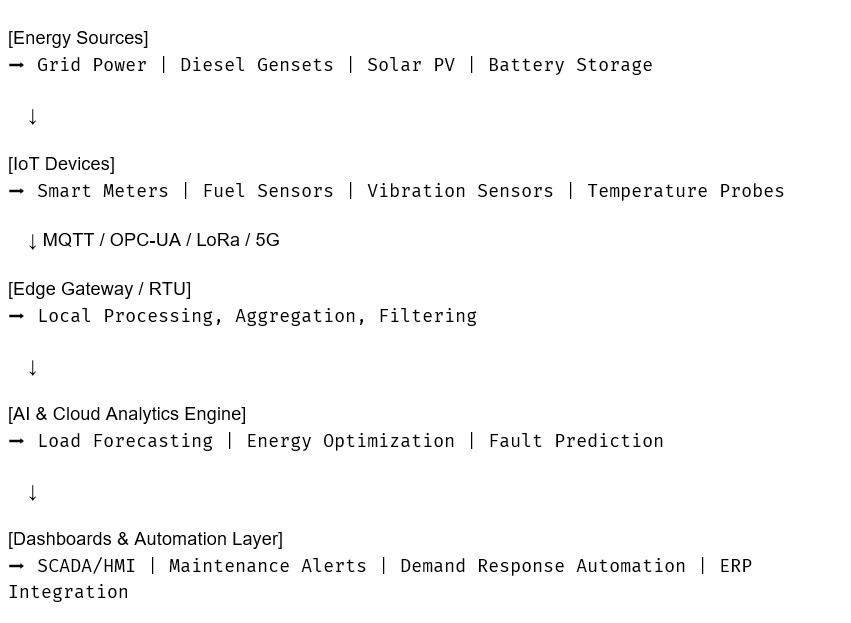
📊 5. KPIs Tracked Using IoT & AI
| Metric |
Description |
| Energy Intensity (kWh/ton of ore) |
Tracks energy efficiency of production |
| Power Factor |
Ensures efficient use of electricity |
| Fuel Usage per Equipment Hour |
Identifies overconsumption and leaks |
| Energy Cost per Operation Cycle |
Links cost to specific machines/processes |
| Carbon Footprint (kg CO₂-eq) |
For ESG & sustainability reporting |
🧩 6. Integration with Other Systems
- EMS (Energy Management System) for overall control
- SCADA systems for supervisory control
- Maintenance platforms (CMMS) to trigger corrective actions
- Enterprise systems (SAP, Oracle) for reporting and procurement
Carbon accounting platforms for ESG compliance
🔁 7. Use Case Example: Smart Diesel Monitoring in Open-Pit Mining
Problem:
Fuel theft and inefficiency in haul trucks lead to 20% excess energy cost.
IoT + AI Solution:
- IoT fuel sensors installed on all haul trucks
- AI models detect anomalous fill patterns and fuel drain
- Real-time fuel consumption dashboards per trip, per operator
- System automatically alerts for:
- Unauthorized refueling
- Idling beyond set thresholds
- Leaks
Result:
- 30% reduction in fuel theft
- 15% improvement in fuel economy
- Real-time dashboards for operations & finance
✅ 8. Benefits of IoT and AI in Energy Management
| Benefit |
Explanation |
| 🔋 Energy Cost Reduction |
Real-time monitoring and predictive control |
| 📉 Peak Demand Avoidance |
Load shedding during peak tariff hours |
| 🔧 Efficient Equipment Operation |
Detects and corrects inefficient machines |
| ♻️ Lower Carbon Emissions |
Optimized energy use and renewable integration |
| 📈 Operational Efficiency |
Enables data-driven maintenance and scheduling |
| 📊 Regulatory Compliance |
Automated carbon and energy reporting for ESG |