Traveling Water Screens in Hydroelectric Power Plants
admin
🔹 Traveling Water Screens in Hydroelectric Power Plants
1. Introduction
A Traveling Water Screen is a continuously moving fine screen designed to filter water entering a hydropower station. It removes debris, weeds, fish, and floating matter that pass through coarse trash racks.
Unlike stationary fine screens, traveling screens are mechanized and self-cleaning, ensuring continuous water flow with minimal manual intervention.
They are critical at intake structures, where uninterrupted, debris-free water supply is needed for:
-
- Turbines (main hydropower generation)
- Cooling systems (generator bearings, lubricating oil systems, auxiliary pumps)
2. Construction
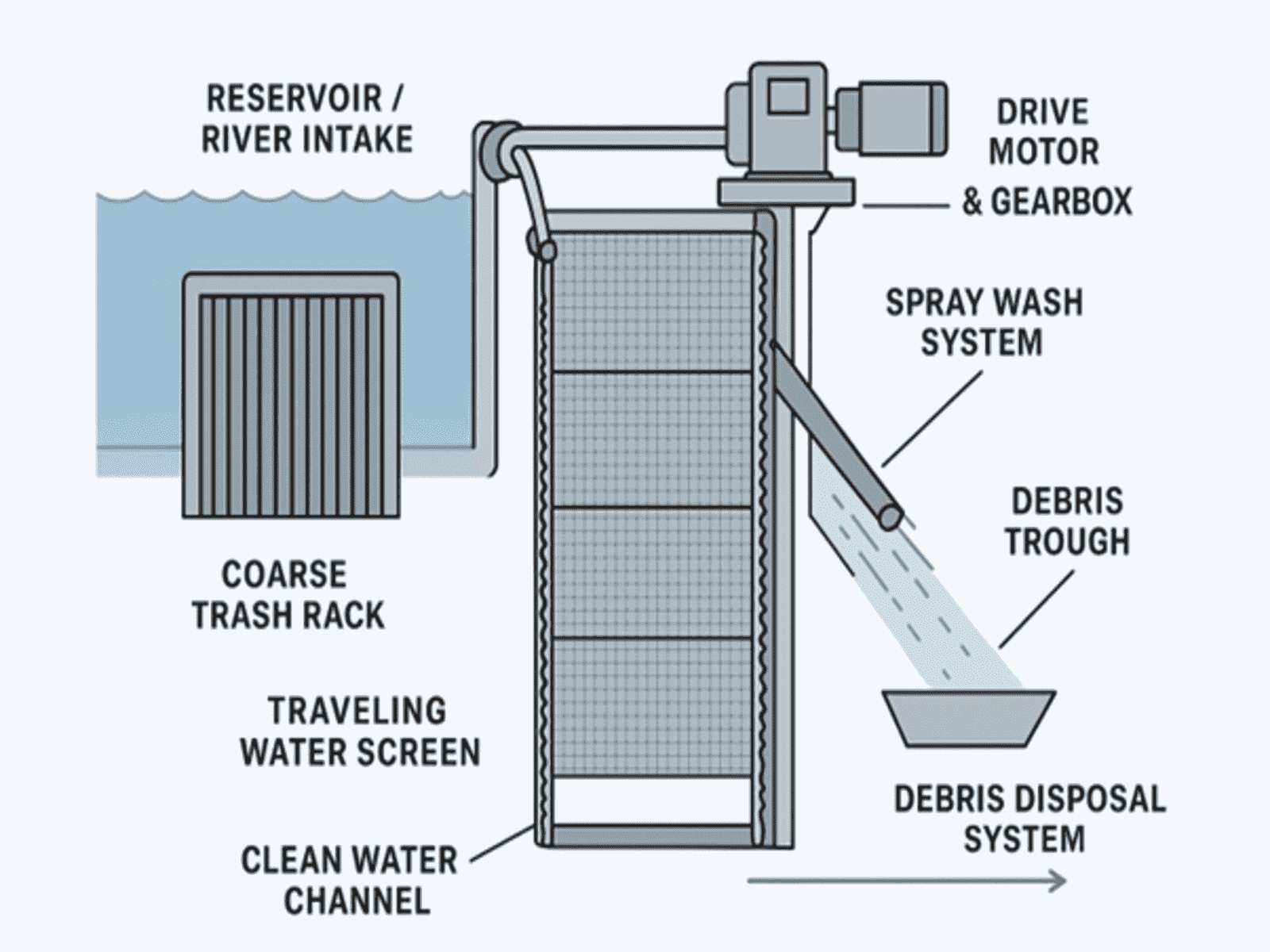
A typical traveling water screen consists of:
- Screen Panels / Baskets → Wire mesh, perforated plates, or bars (3–20 mm openings). Mounted on chains or a frame.
- Chain & Sprocket Mechanism → Moves the screen continuously in a vertical loop.
- Guide Tracks → Ensure smooth movement.
- Drive Motor & Gearbox → Powers the chain system (often variable speed).
- Spray Wash System → High-pressure water jets clean debris off screen panels.
- Debris Trough → Collects removed waste for disposal.
3. Working Principle
-
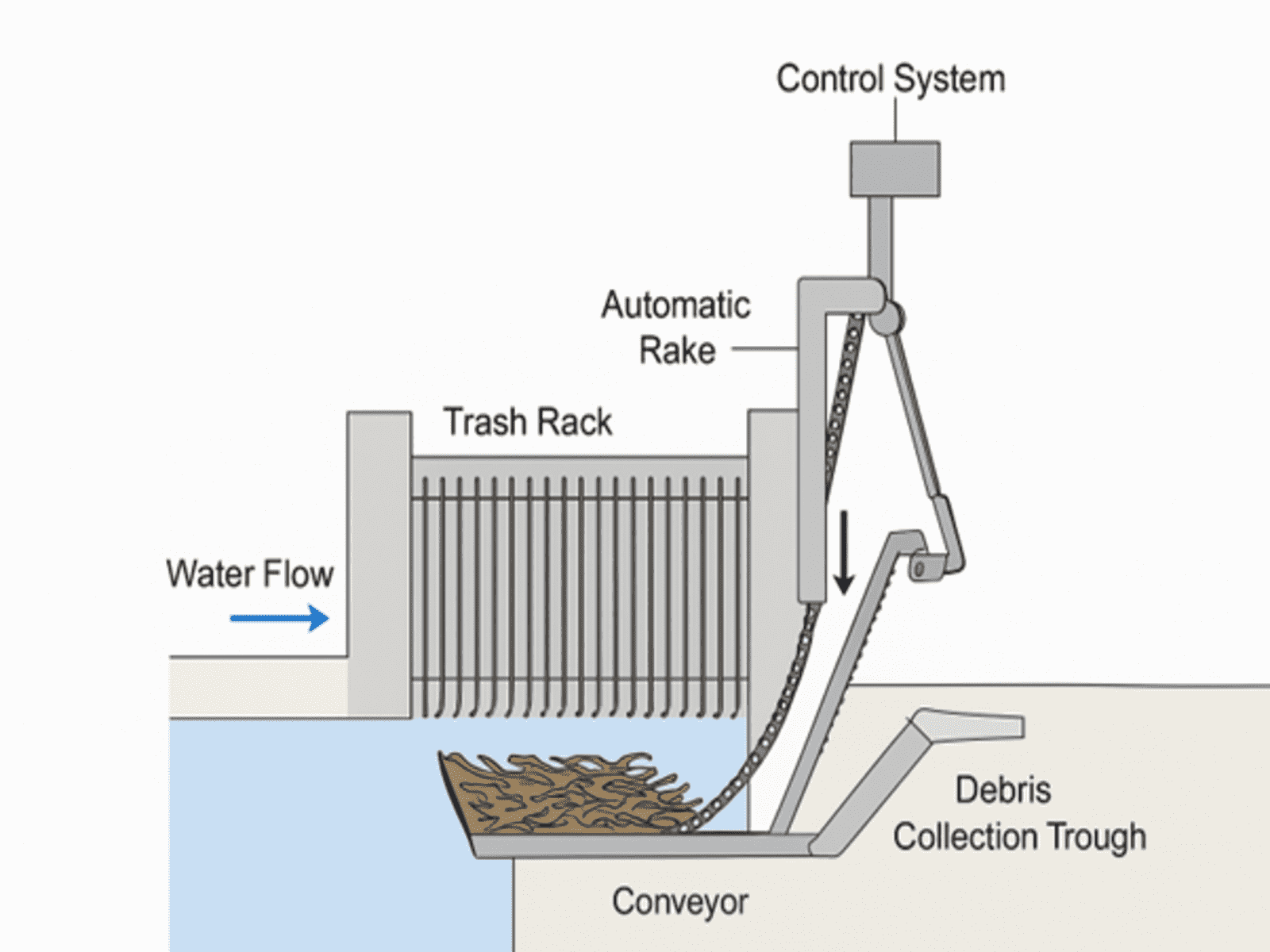
- Water from the reservoir passes first through the coarse trash rack (removes large debris like logs).
- The partially cleaned water flows to the traveling screen.
- Screen panels, moving in a continuous loop, trap smaller debris, fish, and aquatic vegetation.
- As the panels rotate upward, high-pressure spray jets wash off collected material into a debris trough.
- Clean water passes through the screen into the penstock or cooling system.
- The system operates automatically and continuously, ensuring no clogging.
4. Key Functions in Hydropower
- Protects turbines from trash, weeds, and abrasive debris.
- Prevents clogging of cooling water systems.
- Improves turbine efficiency by maintaining steady hydraulic flow.
- Reduces downtime and manual cleaning needs.
- Fish protection: Some traveling screens are designed with fish-friendly buckets and bypass systems to safely guide fish back to the river.
5. Design Considerations
- Screening capacity → Must match intake flow (m³/s).
- Screen mesh size → Typically 3–20 mm depending on debris load and turbine requirements.
- Head loss → Low resistance is critical to avoid energy loss.
- Screen speed → Adjustable; higher during debris-heavy seasons (spring, floods).
- Self-cleaning efficiency → Depends on spray jet design and water pressure.
- Structural durability → Must withstand continuous operation, sediment abrasion, and ice loads (in colder regions).
6. Types of Traveling Water Screens
- Vertical Traveling Screens → Most common; mounted vertically at intake.
- Inclined Traveling Screens → Installed at an angle, easier for fish bypass systems.
- Dual-Flow Traveling Screens → Water flows from both sides through the screen panels, increasing efficiency.
7. Advantages
✅ Continuous automatic cleaning
✅ Reduces turbine wear and damage
✅ Handles variable debris loads (seasonal leaves, floods, algae blooms)
✅ Compatible with IoT & automation for monitoring screen load and optimizing cleaning cycles
✅ Environmentally friendly when equipped with fish diversion systems
8. Challenges & Maintenance
- High initial cost compared to stationary screens
- Requires power for motors and wash system
- Maintenance of chains, sprockets, and nozzles essential
- Corrosion resistance needed (often stainless steel) due to continuous water exposure
9. Integration with IoT & AI
Modern hydropower plants integrate traveling screens with smart monitoring systems:
- Sensors detect head loss across the screen (clogging indicator).
- AI algorithms predict optimal cleaning intervals, reducing water wastage from unnecessary washing.
- Remote monitoring ensures minimal manual labor at unmanned hydropower stations.
- Predictive maintenance alerts operators before mechanical failure occurs.
10. Typical Application in Hydropower Plant Intake
- Reservoir / River Intake
- Coarse Trash Rack (150–50 mm spacing) → Stops large debris
- Traveling Water Screen (3–20 mm spacing) → Removes finer debris, fish, weeds
- Clean Water Channel → Flows into penstock & cooling water pumps
- Debris Disposal System → Conveyors or collection bins
✅ In summary:
Traveling water screens are self-cleaning, continuous screening systems that form the second line of defense after trash racks in hydroelectric power plants. They safeguard turbines, optimize plant performance, and can be designed to be fish-friendly and IoT-enabled for smart, low-maintenance operation.
Related Posts
Sea Water Desalination Through Multi-Effect Distillation (MED) With Thermal Vapour Compression (TVC)
read more
Disinfectant for Poutry Farm
read more
Why disinfectant is necessary for aquafarming
read more
How profitability in aquafarming depends on the use of disinfectants
read more
Bio Security in poultry farm—Fogging procedure of disinfectant
read more
Why Disinfectants Are Necessary in Poultry Farms
read more
Virucidal importance in disease control in AQUAFARMING
read more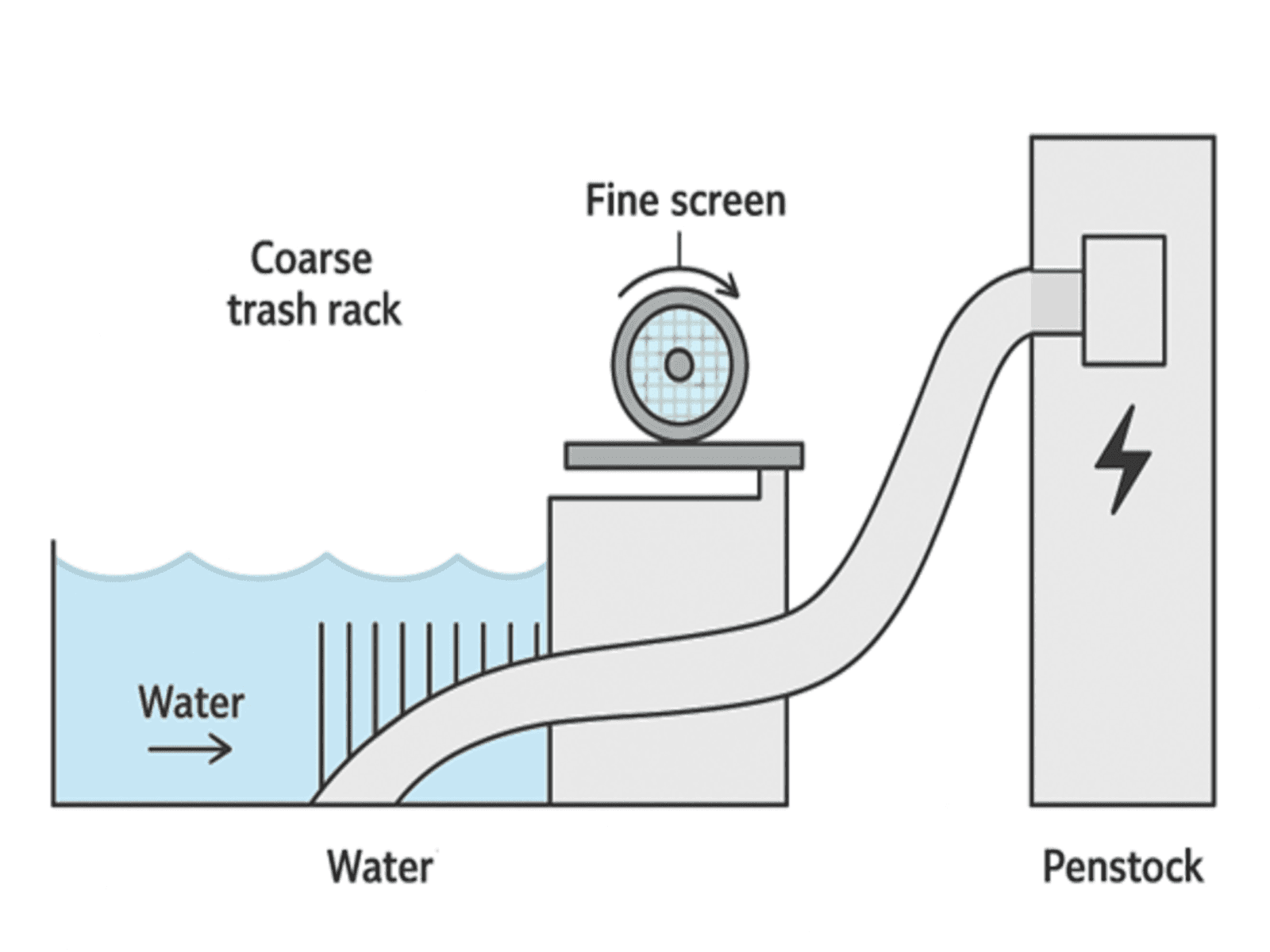
Water Filter Screens in Hydroelectric Power Stations
read more