Use of IoT and Artificial Intelligence in Gas Supply Pipelines (Domestic and Cross-Border)
admin
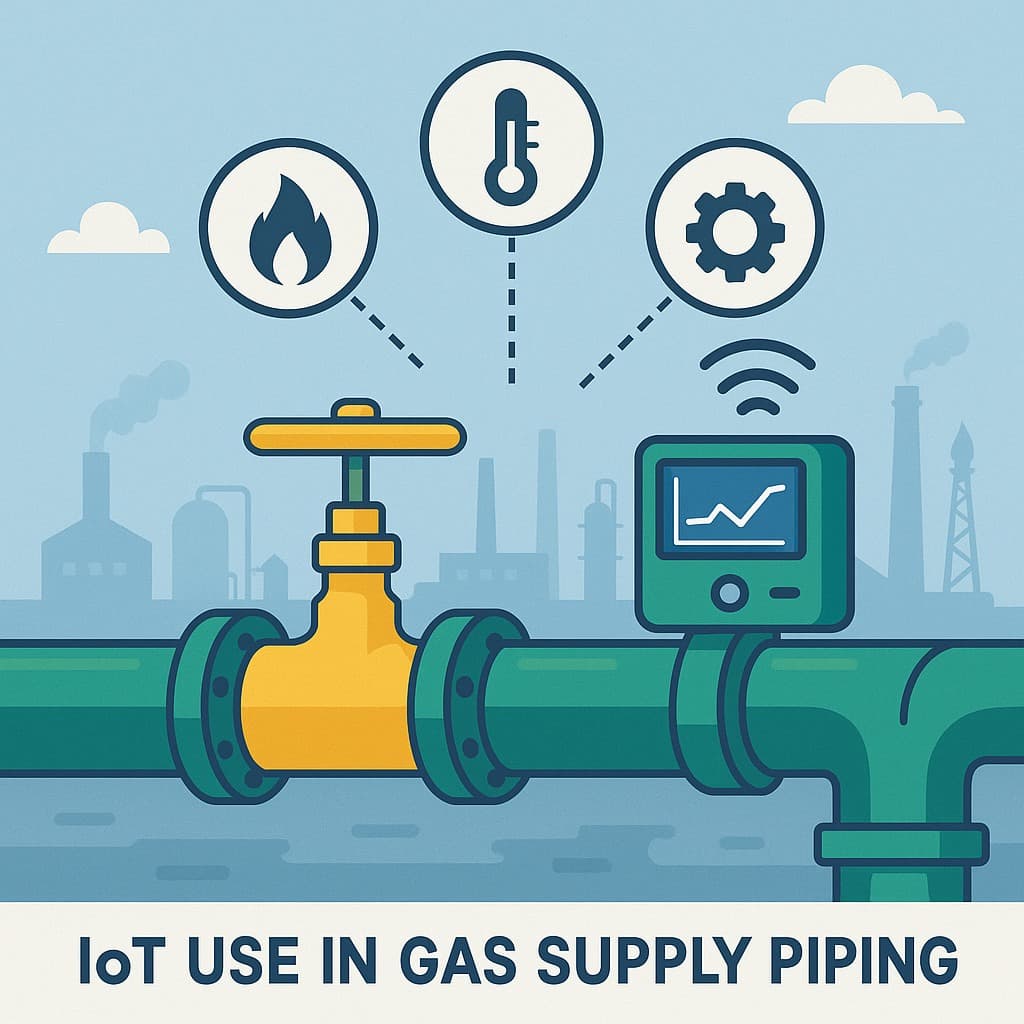
Use of IoT and Artificial Intelligence in Gas Supply Pipelines (Domestic and Cross-Border)
1. Introduction
Gas supply networks—whether within national boundaries or crossing into other countries—form a critical energy infrastructure. These networks face challenges such as:
- Leaks (from corrosion, rupture, or sabotage)
- Theft or illegal tapping
- Pipeline tampering or unauthorized access
- Pressure imbalance or supply disruptions
- Safety hazards due to gas release
- Cross-border custody transfer disputes
The integration of Internet of Things (IoT) and Artificial Intelligence (AI) technologies in gas pipelines can address these challenges effectively by offering real-time monitoring, predictive analytics, automated control, and intelligent threat response.
2. Architecture of an IoT-AI Enabled Gas Pipeline System
2.1 Functional Layers
| Layer | Description |
| Sensor Layer (IoT Devices) | Gathers data on flow, pressure, temperature, leakage, gas concentration, and equipment health |
| Communication Layer | LoRaWAN, NB-IoT, LTE, 5G, satellite, or fiber optics for data transmission |
| Edge Computing Layer | On-site processors perform preliminary analysis, filtering, and decision making |
| Cloud/SCADA Layer | Centralized monitoring, control dashboards, storage, and remote diagnostics |
| AI & Analytics Layer | Advanced pattern recognition, forecasting, fault detection, and optimization |
| User Interface Layer | Web/mobile apps for human operators, alerts, reports, and visualizations |
3. Key IoT Applications in Gas Pipelines
✅ 3.1 Real-Time Monitoring of Pipeline Conditions
IoT sensors provide minute-by-minute data on critical operational parameters:
| Parameter | IoT Sensor Type | Purpose |
| Gas pressure | Smart pressure sensors | Detect pressure loss (leak/theft) or surges |
| Gas flow rate | Ultrasonic flow meters | Ensure consistency between entry and exit |
| Temperature | Thermal sensors | Prevent hydrate formation; detect leaks |
| Gas composition | Gas quality analyzers | Monitor calorific value, H₂S, CH₄ levels |
| Vibration/strain | Strain gauges | Detect pipe stress, bending, or nearby movement |
| Leak detection | Methane/H₂S detectors | Instant alert on gas escape |
| Valve status | Position sensors | Confirm open/close condition of control valves |
| Asset tracking | GPS/RFID tags | Monitor mobile assets like skids or tankers |
These sensors transmit data continuously to SCADA or cloud platforms via secure telemetry.
✅ 3.2 Leak Detection and Safety Assurance
Gas leaks are extremely hazardous. IoT enables faster, more accurate detection using:
- Mass balance calculation: Discrepancy between flow in and out triggers alarms
- Acoustic sensors: Detect ultrasonic noise of escaping gas
- Gas detectors: Monitor presence of CH₄, H₂S, CO
- Thermal cameras and drones: Detect heat signatures of gas jets
- Fiber optic cable: Detects temperature changes or vibrations across kilometers
Edge processing enables local automatic valve shutdown before operator intervention.
✅ 3.3 Pipeline Integrity Monitoring
IoT sensors help monitor:
- Wall thickness via ultrasonic probes
- Corrosion rate using electrochemical sensors
- Pipe movement in seismic areas using GPS and accelerometers
Data is analyzed to forecast pipeline lifespan and detect weak zones before rupture.
✅ 3.4 Remote Valve Control and Automation
Smart valves controlled over IoT networks allow:
- Real-time valve actuation from control centers
- Pre-programmed automatic shutdown during emergencies
- Load balancing by throttling flow between regions
These functions are crucial during:
- Leaks
- Supply surge/dip
- Sabotage or border disputes
✅ 3.5 Border-Crossing Monitoring and Custody Transfer
Cross-border pipelines require:
- Accurate metering at entry/exit points
- Tamper-proof data exchange
- Real-time visibility across both countries
IoT-enabled custody transfer meters measure:
- Volume
- Pressure
- Temperature
- Gas composition
Data is encrypted and can be shared over blockchain to ensure accuracy and traceability between nations.
4. Role of AI in Gas Pipeline Operations
AI enhances the value of IoT by turning raw data into actionable insights.
🤖 4.1 Anomaly Detection
AI continuously analyzes sensor data for anomalies such as:
- Flow spikes or drops
- Pressure fluctuations
- Gas composition changes
- Vibration anomalies (potential tampering)
AI models use pattern recognition to distinguish between normal and suspicious activity—reducing false alarms.
🤖 4.2 Predictive Maintenance
AI processes long-term trends to:
- Predict when compressor parts will fail
- Forecast valve fatigue
- Schedule maintenance before breakdown
Benefits:
- Reduced downtime
- Increased asset life
- Lower O&M costs
🤖 4.3 Theft and Sabotage Detection
AI models detect:
- Unusual flow profiles (indicative of tapping)
- Unauthorized pipeline access via geofencing alerts
- Thermal signatures from people/equipment along the ROW
- Changes in GPS patterns of vehicles carrying gas
AI sends automated alerts and can trigger drones or camera feeds for visual confirmation.
🤖 4.4 Gas Demand Forecasting and Optimization
AI forecasts consumption based on:
- Historical demand
- Weather patterns
- Industrial activity
- Seasonal cycles
Helps in:
- Better dispatch planning
- Load balancing between regions
Avoiding over-pressure or under-delivery
🤖 4.5 Cybersecurity AI
AI systems:
- Monitor traffic from thousands of IoT endpoints
- Detect anomalies (e.g., bot attacks, protocol spoofing, unexpected commands)
- Auto-isolate compromised segments or devices
Helps prevent:
- Hacking of valves
- Spoofing of sensor data
- Infrastructure sabotage
5. Use Cases: Cross-Border vs. Domestic
| Feature | Domestic Pipeline | Cross-Border Pipeline |
| Real-time monitoring | Sensors and SCADA | Binational SCADA with multi-party access |
| Leak response | Local shutoff valves | Coordinated shutdown across borders |
| Custody transfer | Utility-grade metering | International-grade custody meters with AI audit |
| Surveillance | Local patrol and drones | AI-managed multi-country drone zones |
| Regulatory compliance | National standards (e.g. PESO, OSHA) | Bilateral treaties and ISO/API standards |
| Dispute resolution | Corporate-level | Inter-governmental, with shared blockchain records |
6. Benefits Summary
| Domain | IoT & AI Benefits |
| Safety | Instant leak detection, automated shutdowns |
| Operational Efficiency | Real-time flow balancing, fault prediction |
| Asset Management | Predictive maintenance extends equipment life |
| Security | Early theft detection, ROW monitoring |
| Data Integrity | Blockchain integration, audit trails |
| Cross-Border Transparency | Trusted data sharing, reduced disputes |
| Environmental Compliance | Minimized emissions, accurate reporting |
7. Challenges and Solutions
| Challenge | IoT/AI Solution |
| Remote pipeline sections | Solar-powered IoT nodes + satellite connectivity |
| Harsh environments (desert, offshore) | Ruggedized sensors and enclosures |
| Data overload | Edge analytics filters only relevant alerts |
| Legacy integration | IoT gateways with Modbus/OPC-UA converters |
| Security risks | Encrypted transmission, AI intrusion detection |
| Cross-border coordination | Multi-stakeholder dashboards + blockchain ledgers |
8. Future Trends
- Digital Twins of entire pipeline networks for simulation and real-time optimization
- Autonomous Drones patrolling hundreds of kilometers with AI vision
- Edge AI Gateways performing real-time threat detection onsite
- AI-Augmented Regulatory Reporting with automated incident analysis
AI-driven Carbon Accounting for Scope 1 and Scope 2 emissions
✅ Conclusion
The integration of IoT and AI in domestic and cross-border gas supply pipelines is transforming the industry into a smart, self-monitoring, and highly secure system. These technologies:
- Prevent gas theft and tampering
- Ensure safe, balanced, and optimized operations
- Enable transparency in multi-country networks
- Automate emergency response
- Minimize downtime and emissions
This digital transformation is essential for achieving operational excellence, sustainability, and energy security in the 21st century.
Related Posts
Sea Water Desalination Through Multi-Effect Distillation (MED) With Thermal Vapour Compression (TVC)
read more
Disinfectant for Poutry Farm
read more
Why disinfectant is necessary for aquafarming
read more
How profitability in aquafarming depends on the use of disinfectants
read more
Bio Security in poultry farm—Fogging procedure of disinfectant
read more
Why Disinfectants Are Necessary in Poultry Farms
read more
Virucidal importance in disease control in AQUAFARMING
read more
Water Filter Screens in Hydroelectric Power Stations
read more