How
IoT (Internet of Things) and
Artificial Intelligence (AI) are used in the
mining industry for inventory and consumables tracking, including system architecture, components, and benefits:
🏗️ 1. Background and Importance
Mining operations rely on a wide range of
consumables and spare parts, such as:
- Blasting materials (explosives, detonators)
- Drill bits, lubricants, and cutting fluids
- Wear parts for crushers, mills, conveyors
- Safety gear, PPE kits, filters
- Diesel, hydraulic oil, greases
- Conveyor belts, cables, and electrical spares
Poor inventory visibility leads to:
- Stockouts, causing unplanned downtime
- Overstocking, tying up capital
- Loss or theft, especially for high-value or hazardous materials
- Inefficient procurement and delays
📶 2. IoT Use in Inventory & Consumables Tracking
A. RFID (Radio-Frequency Identification) Tags
- Passive RFID tags attached to consumables and spare parts
- Readers at entry/exit points (e.g., stores, workshops, tool cribs)
- Automates tracking of movement, usage, issuance, and returns
B. BLE (Bluetooth Low Energy) & LoRa Sensors
- For tracking high-value assets or tools in real-time over wide areas
- Used to monitor tool usage in workshops, mining sites
C. Weight Sensors & Load Cells
- Measure remaining quantity in:
- Diesel tanks
- Lubricant drums
- Chemical dosing tanks
- Explosives magazines
D. Barcode / QR Code Integration
- Smart handheld scanners used by warehouse staff for:
- Stock checks
- Issuance and returns
- Batch and expiry tracking
E. Smart Cabinets & Vending Machines
- Lockable units with IoT control
- Used for automatic dispensing of PPE, tools, or consumables
- Access logged via RFID badges or biometrics
🧠 3. Artificial Intelligence Applications
A. Demand Forecasting
- AI uses historical usage data, production schedules, and equipment health data to:
- Predict future consumption
- Plan reordering automatically
- Prevent emergency procurement
B. Inventory Optimization
- Machine learning models determine:
- Optimal reorder points (ROP)
- Economic order quantity (EOQ)
- Just-in-time (JIT) stocking strategies
C. Anomaly Detection
- AI flags:
- Unusual withdrawals (potential theft or hoarding)
- Sudden spikes in consumption (possible equipment issues)
- Expired stock being issued
D. Automated Procurement Triggers
- AI-powered systems generate purchase requests (PRs) when:
- Inventory falls below thresholds
- Predicted lead time and consumption risk stockout
E. Usage Pattern Recognition
- AI identifies:
- Which crews or shifts consume more
- Which tools or spares fail more frequently (linked to operator behavior)
🧩 4. System Architecture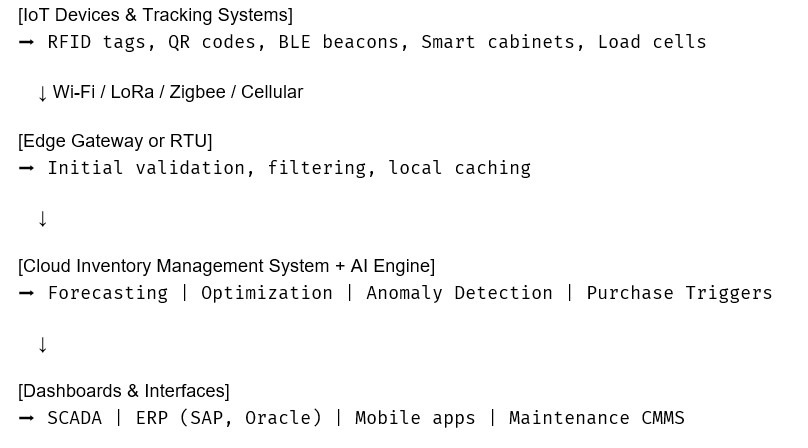
🧾 5. Use Case Example: Lubricant Inventory Tracking
Problem:
Frequent
stockouts of hydraulic oil disrupted underground mining equipment operations.
Solution:
- IoT load cells installed under lubricant tanks
- AI forecasted consumption patterns based on equipment hours and maintenance logs
- Automated PRs sent to procurement 5 days before depletion
- Alerts set for unauthorized withdrawals
Outcome:
- 25% reduction in unplanned downtime due to consumable shortage
- Optimized inventory levels with no overstocking
📊 6. Key KPIs Tracked
| KPI |
Description |
| Inventory Turnover Ratio |
How frequently stock is consumed and replaced |
| Stock-out Incidents |
Number of times critical stock reaches zero |
| Inventory Accuracy % |
Matches between system and actual quantity |
| Lead Time Compliance |
Procurement lead time accuracy |
| Stock Holding Cost |
Total cost of holding excess inventory |
🔐 7. Security and Safety Integration
- Explosives and chemical tracking via RFID to meet DGMS and safety regulations
- Tamper alerts for unauthorized access to controlled items
- AI compliance dashboards for audit trails and safety reporting
✅ 8. Benefits of IoT & AI in Inventory Management
| Benefit |
Description |
| 📉 Reduced Downtime |
Spares and consumables always available when needed |
| 🔄 Just-in-Time Inventory |
Minimized holding cost and space |
| 🔐 Improved Security |
Theft and misuse detection |
| ⚙️ Operational Efficiency |
Streamlined issuance, returns, and usage logging |
| 📈 Data-Driven Procurement |
Smart reordering and budget planning |
| 📋 Regulatory Compliance |
Track hazardous material flow and audit readiness |