IoT & AI in Warehousing Management
admin
1. Introduction
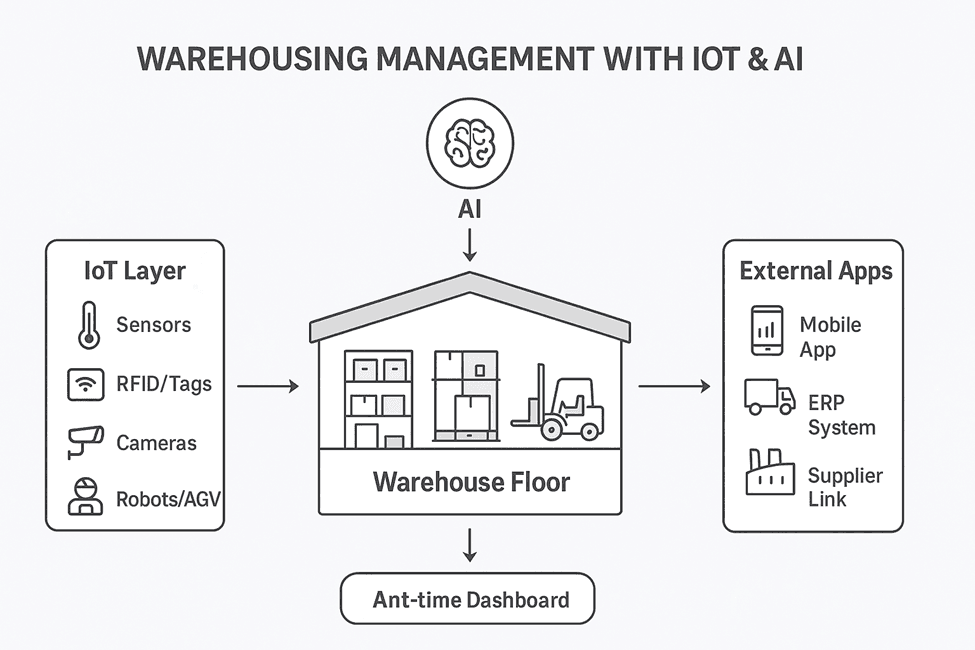
Traditional warehouses rely heavily on manual processes, making them prone to errors, delays, and inefficiencies. With IoT sensors and AI-driven analytics, warehouses can achieve real-time visibility, automation, and predictive intelligence.2. Applications of IoT in Warehousing
IoT enables connectivity, monitoring, and control inside warehouses.- Real-Time Inventory Tracking
- RFID tags, smart shelves, and barcode scanners update stock levels automatically.
- Prevents stockouts and overstocking.
- Environmental Monitoring
- IoT sensors measure temperature, humidity, vibration, and light.
- Crucial for pharmaceuticals, food, and chemicals that need strict storage conditions.
- Automated Equipment Monitoring
- Sensors on forklifts, conveyors, and robots track usage, fuel, and wear & tear.
- Enables predictive maintenance.
- Warehouse Security
- IoT-enabled cameras, motion sensors, and smart locks ensure asset protection.
- Alerts for unauthorized access or tampering.
- Energy Management
- Smart meters and IoT sensors optimize lighting, cooling, and HVAC systems.
- Reduces energy costs.
3. Applications of AI in Warehousing
AI processes IoT-generated data and provides automation, prediction, and optimization.- Automated Picking & Packing
- AI-driven robots use computer vision to pick items with accuracy.
- Reduces human errors and speeds up order fulfillment.
- Demand Forecasting
- AI analyzes sales data, trends, and seasonal demand.
- Ensures optimal stock levels in the warehouse.
- Intelligent Route Planning (Inside Warehouse)
- AI optimizes routes for robots and workers.
- Reduces travel time in large warehouses.
- Predictive Maintenance
- AI predicts when equipment will fail.
- Prevents downtime in critical warehouse machinery.
- Labor Optimization
- AI schedules workforce shifts based on demand, peak times, and workload.
- Increases productivity and reduces overtime costs.
4. Combined Benefits of IoT + AI in Warehousing
- End-to-End Visibility – Track goods from arrival to dispatch in real-time.
- Reduced Costs – Less waste, energy use, and equipment downtime.
- Faster Operations – AI-powered robots + IoT tracking speeds up processes.
- Higher Accuracy – Reduced inventory errors and misplacements.
- Customer Satisfaction – Faster and more reliable order fulfillment.
5. Future of Smart Warehousing
- Autonomous Warehouses – Fully automated warehouses with IoT-driven robots and AI scheduling.
- Digital Twins – Virtual replicas of warehouses for simulation and optimization.
- Drone Inventory Checks – IoT-enabled drones scanning shelves with AI vision.
- Blockchain + IoT – Ensuring transparency and traceability of warehouse data.
- IoT provides data collection and real-time monitoring.
- AI provides decision-making, prediction, and automation.Together, they make warehouses smarter, leaner, and customer-centric.
Related Posts
Sea Water Desalination Through Multi-Effect Distillation (MED) With Thermal Vapour Compression (TVC)
read more
Disinfectant for Poutry Farm
read more
Why disinfectant is necessary for aquafarming
read more
How profitability in aquafarming depends on the use of disinfectants
read more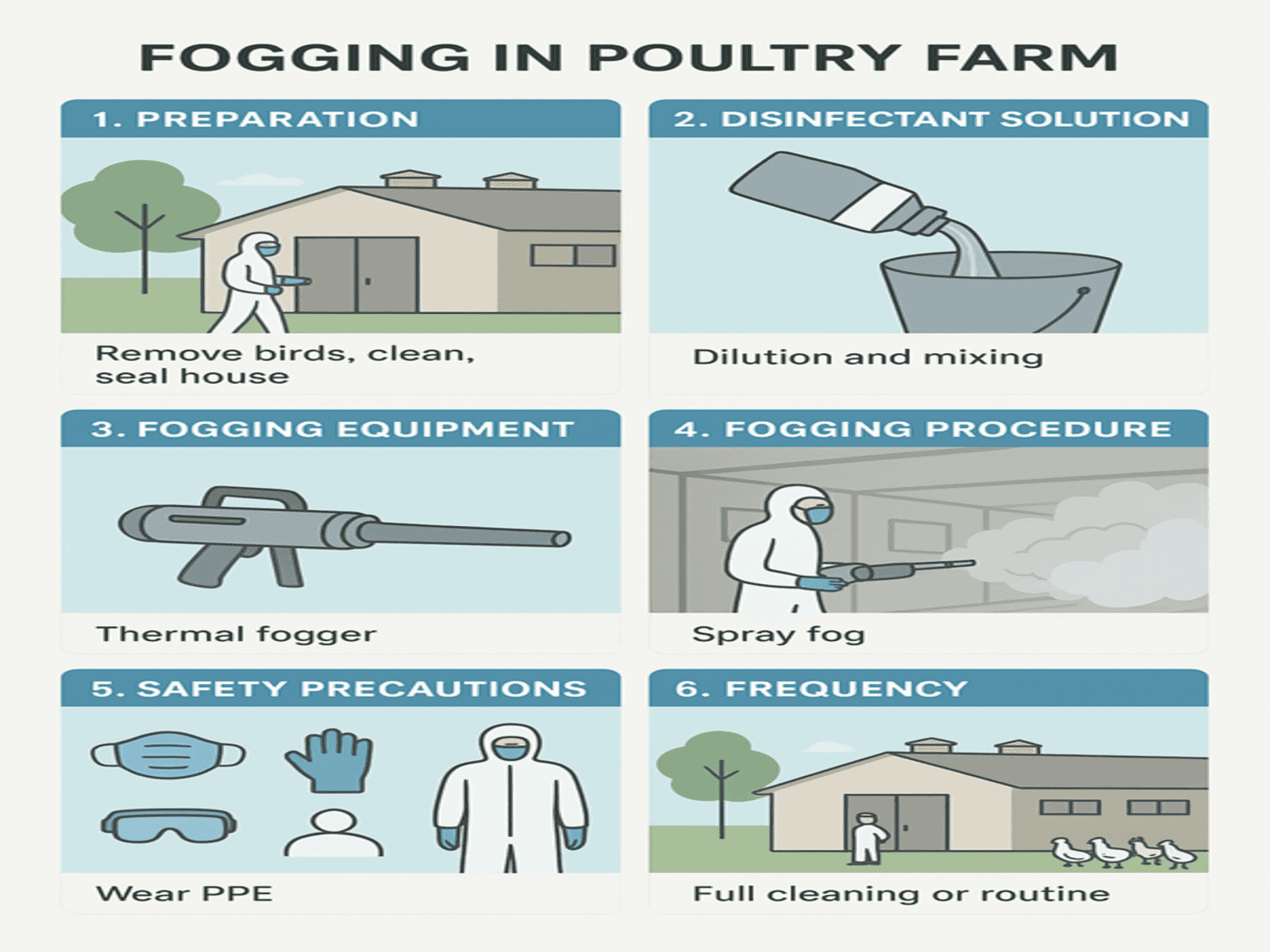
Bio Security in poultry farm—Fogging procedure of disinfectant
read more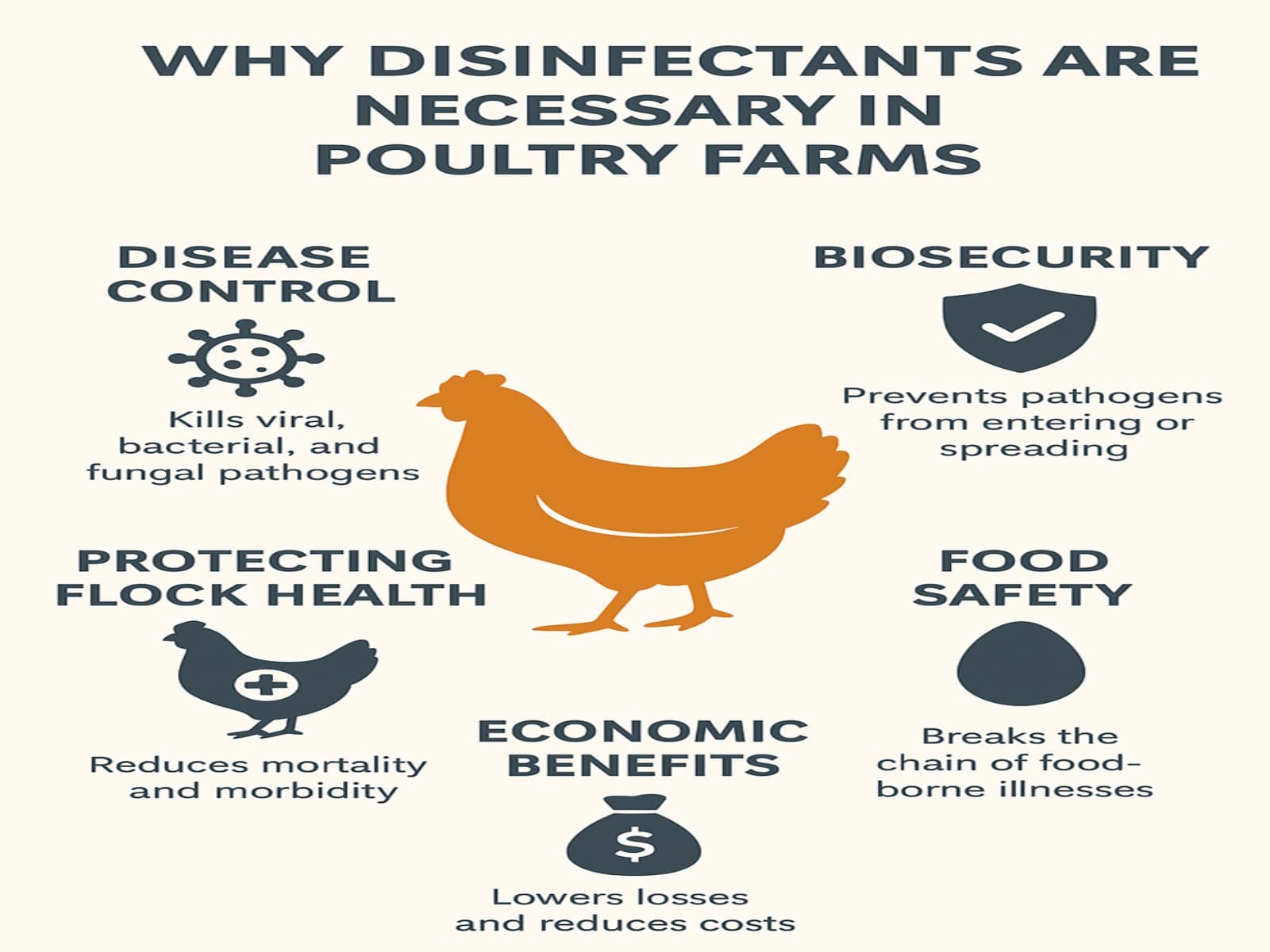
Why Disinfectants Are Necessary in Poultry Farms
read more
Virucidal importance in disease control in AQUAFARMING
read more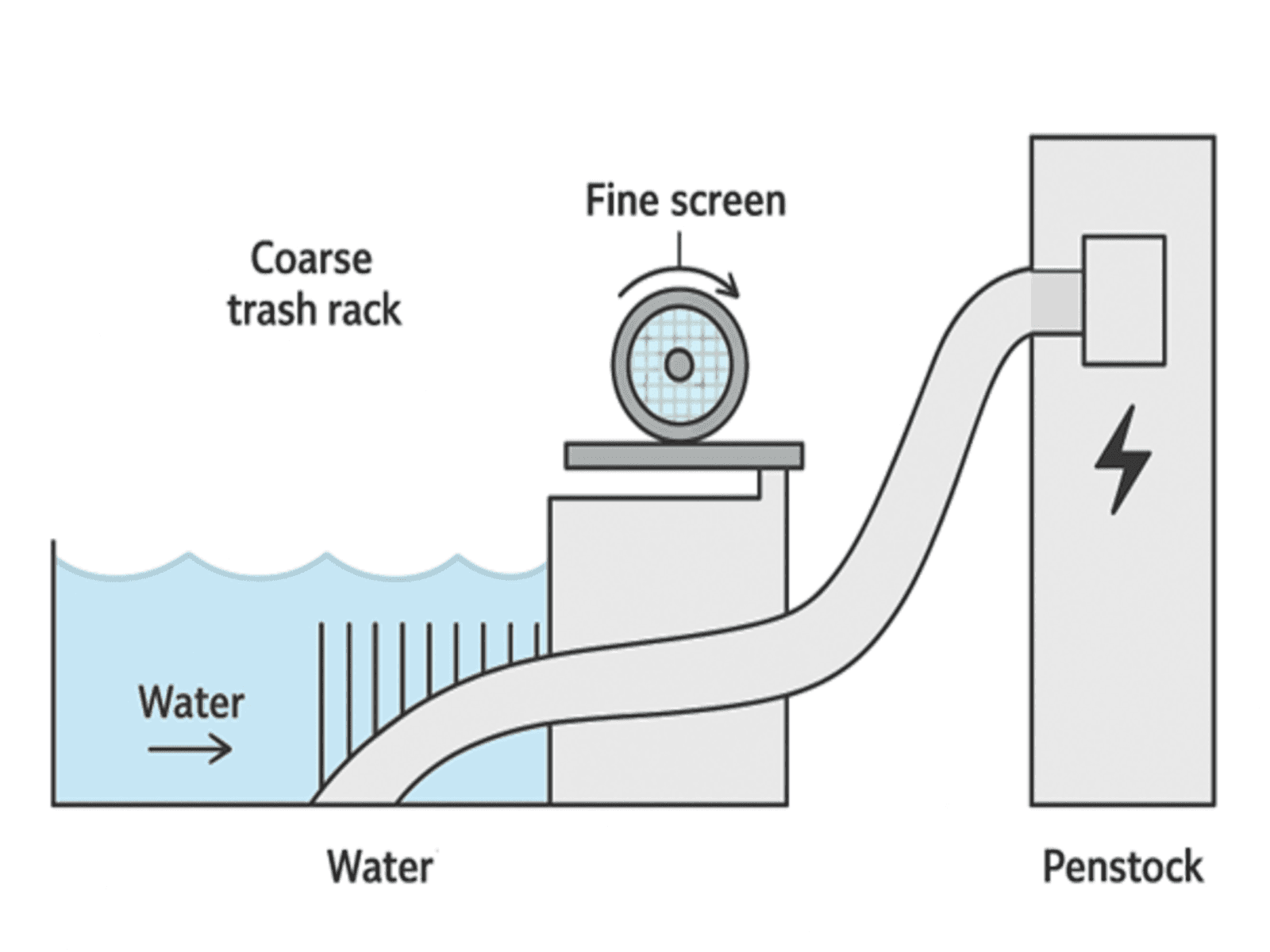
Water Filter Screens in Hydroelectric Power Stations
read more