Advanced Application of IoT and Artificial Intelligence in Unmanned Crude Oil Wells
As oil fields become increasingly complex and shift toward remote and offshore locations, the demand for automation and intelligent operation grows.
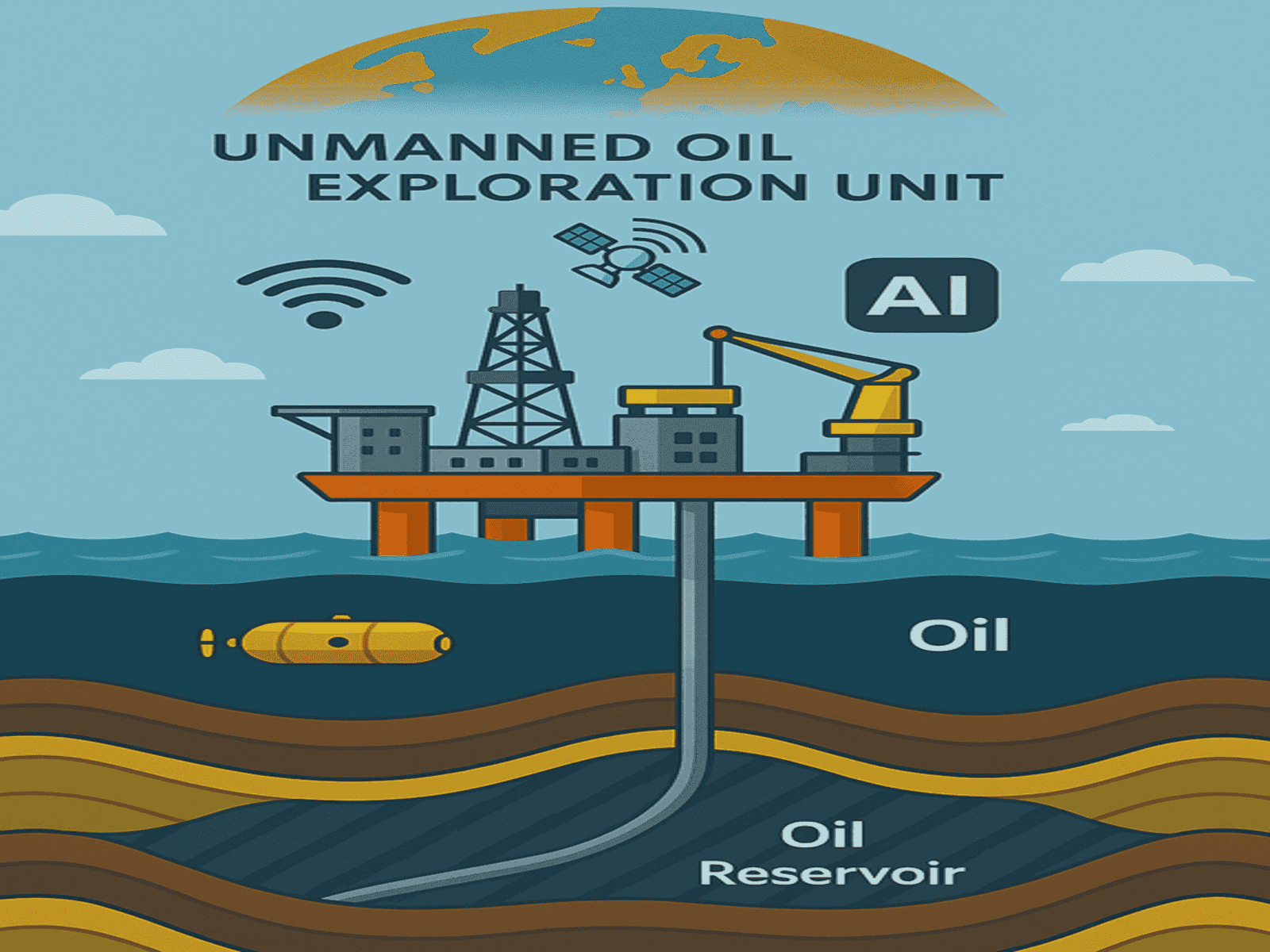
Unmanned crude oil wells—wells operated without a constant human presence—leverage
IoT and
AI to ensure safe, efficient, and continuous production. These technologies enable smart surveillance, real-time control, anomaly detection, and decision automation.
1. Internet of Things (IoT) in Unmanned Oil Wells
1.1 Role of IoT in the Oilfield
The IoT ecosystem in unmanned wells involves
sensors,
communication modules,
edge devices, and
data analytics platforms. IoT connects all components of the well site to central control rooms or cloud infrastructure, creating a
digital twin of the well in real time.
1.2 Types of Sensors and Devices Used
| Sensor Type |
Measured Parameter |
Purpose |
| Pressure sensors |
Wellhead & annulus pressure |
Safety, reservoir monitoring |
| Temperature sensors |
Fluid and ambient temperature |
Thermal performance, gas behavior |
| Flow meters (Coriolis, DP) |
Oil, gas, water flow rates |
Production monitoring and allocation |
| Vibration sensors |
Rotating equipment health |
Predictive maintenance |
| Level transmitters |
Separator and tank levels |
Avoid overflow or dry run conditions |
| Gas detectors |
H2S, CH₄, CO₂ leaks |
Safety and emission monitoring |
| Acoustic sensors |
Leak detection in pipelines |
Integrity monitoring |
1.3 IoT System Architecture for Unmanned Wells
- Sensor Layer: Distributed sensors on pumps, separators, pipelines, tanks.
- Edge Computing Devices: RTUs, PLCs, or industrial PCs perform local processing.
- Communication Layer:
- Onshore: LPWAN (LoRa, NB-IoT), Zigbee, or 4G/5G
- Offshore/Remote: Satellite or VSAT
- Cloud/SCADA Layer: Data sent to cloud platforms (AWS, Azure) or centralized SCADA for visualization and control
- Cybersecurity: Secure communication via MQTT with TLS, firewalls, and anomaly detection algorithms.
2. Artificial Intelligence in Unmanned Oil Wells
AI transforms raw IoT data into actionable insights. AI algorithms can operate at the
edge or in the
cloud, offering analytics, optimization, forecasting, and autonomous decision-making.
2.1 AI Capabilities Across the Oil Well Lifecycle
| AI Function |
Application |
| Predictive Maintenance |
Prevent failures of ESPs, motors, compressors using ML models |
| Production Forecasting |
Use historical flow data and reservoir models to estimate output |
| Well Performance Analysis |
Detect deviations from expected production profiles |
| Reservoir Behavior Modeling |
Use real-time data to update reservoir simulation models |
| Dynamic Choke Optimization |
AI adjusts choke settings based on pressure, flow, water cut |
| Smart Alarms |
AI filters out false alarms and escalates critical ones |
| Leak & Spill Detection |
AI analyzes acoustic and pressure anomalies to detect leaks |
2.2 Common AI Models Used
- Supervised learning for predicting equipment failures
- Unsupervised learning for anomaly detection in sensor data
- Reinforcement learning for autonomous control and optimization
- Time-series forecasting for flow rates, pressures, and energy consumption
2.3 Edge vs Cloud AI
| Parameter |
Edge AI |
Cloud AI |
| Latency |
Low |
Higher |
| Dependence on Internet |
Minimal (works offline) |
High |
| Application |
Emergency shut-offs, pump control |
Trend analysis, forecasting, optimization |
| Example Device |
NVIDIA Jetson, HPE Edgeline |
Azure Machine Learning, AWS SageMaker |
3. Integration of IoT and AI: A Real-World Scenario
Example: Smart Unmanned Onshore Oil Well
- Sensors measure flow rate (3-phase separator), tubing pressure, casing pressure, and ESP current draw.
- Edge gateway collects data and detects anomalies in ESP behavior using AI.
- Upon detecting abnormal vibration and power spikes, AI model predicts impeller wear.
- System sends alert via cloud dashboard, triggers an automatic valve shut-in protocol, and requests maintenance.
- AI forecasts next 30-day production decline curve and suggests optimal pump restart time.
4. Benefits of IoT & AI Integration in Unmanned Wells
| Category |
Benefit |
| Operational Efficiency |
Reduced need for site visits and manual inspections |
| Safety |
Fewer personnel exposed to hazardous conditions; immediate leak detection |
| Cost Saving |
Predictive maintenance reduces unplanned downtime and repair costs |
| Enhanced Production |
Dynamic optimization ensures maximum recovery with minimal water/gas cut |
| Environmental Protection |
Continuous emission monitoring and fast leak response |
| Resilience |
Edge AI allows autonomous operation even during connectivity loss |
5. Technologies and Standards Commonly Used
- Protocols: Modbus TCP/IP, MQTT, OPC UA
- Platforms:
- IoT: Azure IoT Hub, AWS IoT Core, Siemens MindSphere
- AI: TensorFlow, PyTorch, DataRobot
- Cybersecurity: ISA/IEC 62443 standards, TLS encryption, AI-based intrusion detection
- AI Frameworks: Apache Kafka (stream processing), MLflow (ML lifecycle), Grafana (dashboards)
6. Challenges and Considerations
- Data Quality: Faulty sensors can cause inaccurate predictions.
- Connectivity: Satellite links can have latency or bandwidth issues.
- Security: Cybersecurity risks due to exposed IoT endpoints.
- Integration: Legacy equipment compatibility with modern IoT/AI systems.
- Scalability: Coordinating across hundreds of wells and multiple data sources.
Conclusion
Unmanned crude oil wells powered by IoT and AI represent a paradigm shift in upstream oil operations. These technologies allow oil producers to maintain high efficiency, safety, and profitability in even the most inaccessible and hostile environments. The fusion of smart sensors, remote connectivity, and intelligent algorithms enables wells to be
self-monitoring,
self-optimizing, and
resilient to failures—marking the emergence of
autonomous oilfields.